
Professor from Ghent University (Belgium) shares a new approach in human resource management

Ghent University Professor Shares New Perspectives on Human Resource Management
On the afternoon of October 18, 2026, students enrolled in the HSB-MBA master's program participated in a special academic session on sustainable human resource management with Professor Alex Vanderstraeten from Ghent University, Belgium. Held as part of the course "Human Resource and Talent Management for Managers," the session offered valuable insights into aligning workforce development with organizational performance and long-term sustainability. Drawing on nearly five decades of experience in research, teaching, and management consulting, Professor Vanderstraeten shared his extensive expertise and perspectives on contemporary human resource management.
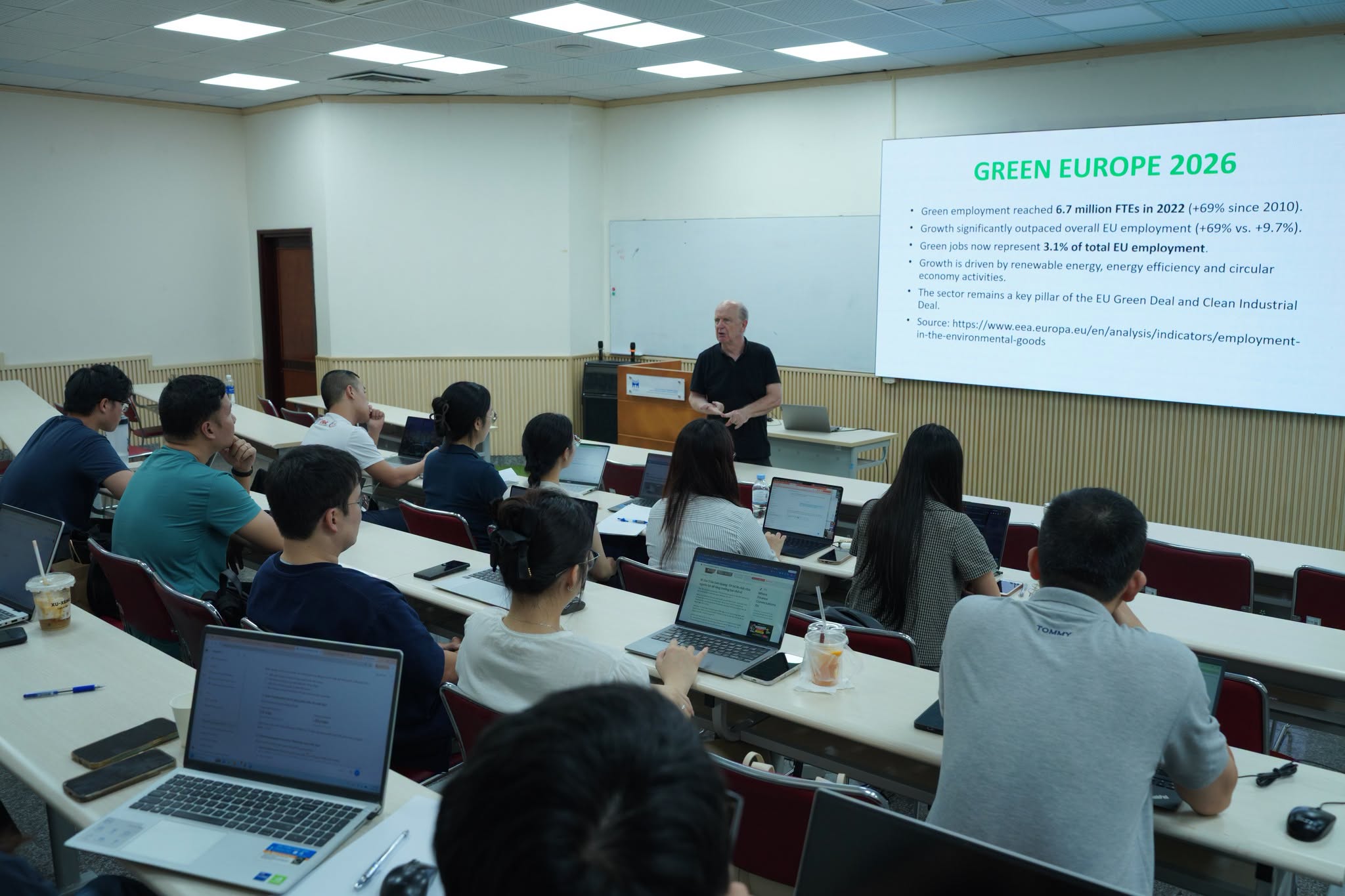
Sustainable Human Resource Management: From Business Performance to Long-Term Value
As businesses continue to navigate digital transformation, labor market fluctuations, and increasing expectations for sustainable development, human resource management is undergoing significant changes in both philosophy and practice. While traditional approaches often focus on recruitment, training, performance appraisal, and personnel cost control, sustainable human resource management broadens the perspective to consider the long-term effects of HR policies on employees and organizations.
Sustainable Human Resource Management (Sustainable HRM) seeks to integrate economic objectives with social and human considerations in organizational management. Under this approach, the effectiveness of HR policies is measured not only by productivity or immediate business results but also by their ability to support employee health, well-being, motivation, professional development, and engagement.
MANAGEMENT PERSPECTIVES
This approach raises important questions for managers: How can organizations improve performance without placing employees under prolonged pressure? How can investments in training and talent development create value for both individuals and businesses? And how can HR policies help build organizations capable of adapting, innovating, and maintaining stability over the long term?
These questions extend beyond the boundaries of personnel management and are directly linked to business strategy and organizational competitiveness. A company may achieve strong short-term results while remaining vulnerable if it cannot retain a capable workforce, lacks effective talent development mechanisms, or fails to maintain a healthy working environment.
Through the session, HSB-MBA students were introduced to a systemic approach to human resource management, in which people are recognized not only as resources that generate value but also as individuals whose capabilities and potential deserve continued investment. Balancing organizational effectiveness, employee interests, and long-term objectives is therefore a central consideration in developing modern HR strategies.
Bridging Academic Research and Practical Management Tools
Professor Alex Vanderstraeten is a professor at Ghent University, affiliated with the Faculty of Economics and Business Administration. His areas of expertise include strategic human resource management, sustainable HRM, social dialogue, and organizational sociology. He has extensive international teaching experience and has conducted research on performance management, organizational development, and the relationship between management practices and organizational outcomes.
With nearly 50 years of professional experience, Professor Vanderstraeten brings a substantial foundation of research and practical knowledge in people management. His contributions emphasize approaches that position HRM not merely as a supporting function but as an integral component of organizational strategy, operational effectiveness, and sustainable development.
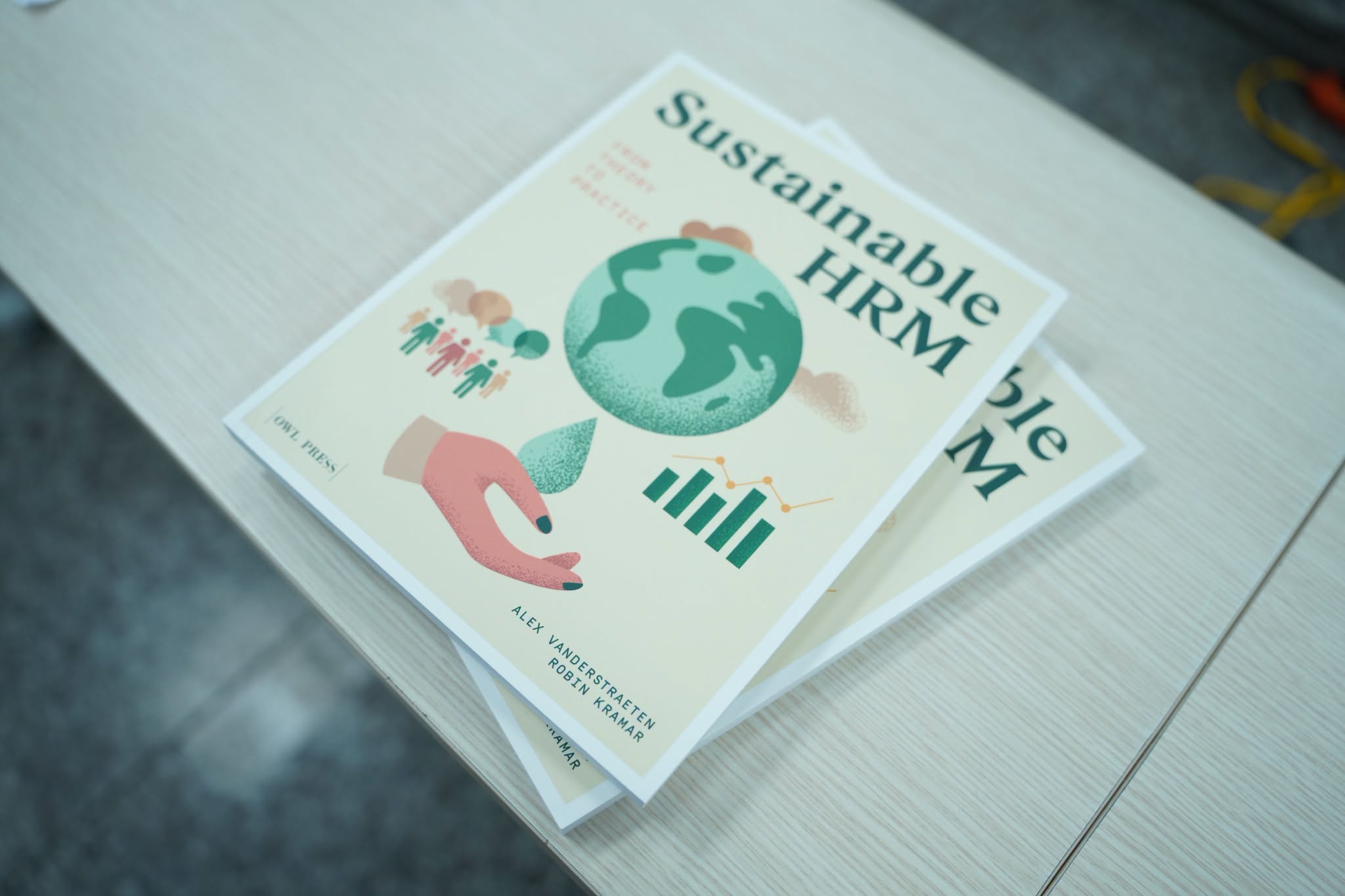
One of his notable publications is Sustainable HRM: From Theory to Practice, co-authored with Professor Robin Kramar and published in 2021 by OWL PRESS Borgerhoff & Lamberigts. The book provides a systematic overview of the theoretical foundations of sustainable HRM, examines how it differs from conventional personnel management, and presents practical cases and tools to help organizations develop, evaluate, and improve their sustainable HR strategies. https://biblio.ugent.be/publication/8737184
FROM THEORY TO PRACTICE
Sustainable HRM Cockpit
Notably, the book introduces the Sustainable HRM Cockpit, a tool designed to support the development and evaluation of sustainable human resource management strategies. It reflects the connection between academic research and managerial practice, helping organizations translate sustainability principles into concrete HR priorities and activities.
The value of this perspective lies in broadening the criteria used to assess management effectiveness. Rather than focusing exclusively on financial indicators or productivity, businesses should also consider human and social outcomes, identify potential tensions between short-term objectives and long-term interests, and adjust their HR policies accordingly.
For managers, this provides a foundation for reconsidering job design, resource allocation, performance evaluation, employee training, and talent retention. HR decisions should be aligned with the organization's overall development strategy instead of being implemented separately within individual functions.
Ghent University: An Internationally Recognized Academic Institution
Ghent University (UGent) is one of Belgium's major research universities, recognized for its scientific research, multidisciplinary education, and international academic partnerships. Its teaching and research activities span a wide range of disciplines, from natural sciences, engineering, and biomedical sciences to economics, management, and the social sciences.
QS WORLD UNIVERSITY RANKINGS 2027
Ghent University's Global Ranking
Ghent University's international standing is reflected in major global university rankings. According to the QS World University Rankings 2027, the university is ranked joint 150th worldwide, maintaining its position among internationally recognized higher education institutions. https://www.topuniversities.com/qs-top-uni-wur
In economics and management, the university's interdisciplinary research environment and international collaboration network enable organizational management, human resource development, and performance-related issues to be examined from multiple perspectives. Direct engagement with Professor Vanderstraeten therefore provided HSB-MBA students with opportunities not only to strengthen their subject knowledge but also to explore European academic perspectives and management practices.
Connecting International Knowledge with Business Management Practice
For MBA students, the value of specialized academic sessions extends beyond acquiring theoretical knowledge to applying new perspectives to real organizational challenges. Sustainable HRM requires managers to consider workforce policies in relation to business strategy, organizational culture, and long-term development capabilities.
From an executive perspective, establishing a sustainable HR management system requires organizations to define clear objectives, select appropriate performance indicators, monitor policy impacts, and make adjustments based on data and employee feedback. Such practices help move businesses beyond short-term problem-solving toward building a resilient workforce capable of adapting to change.
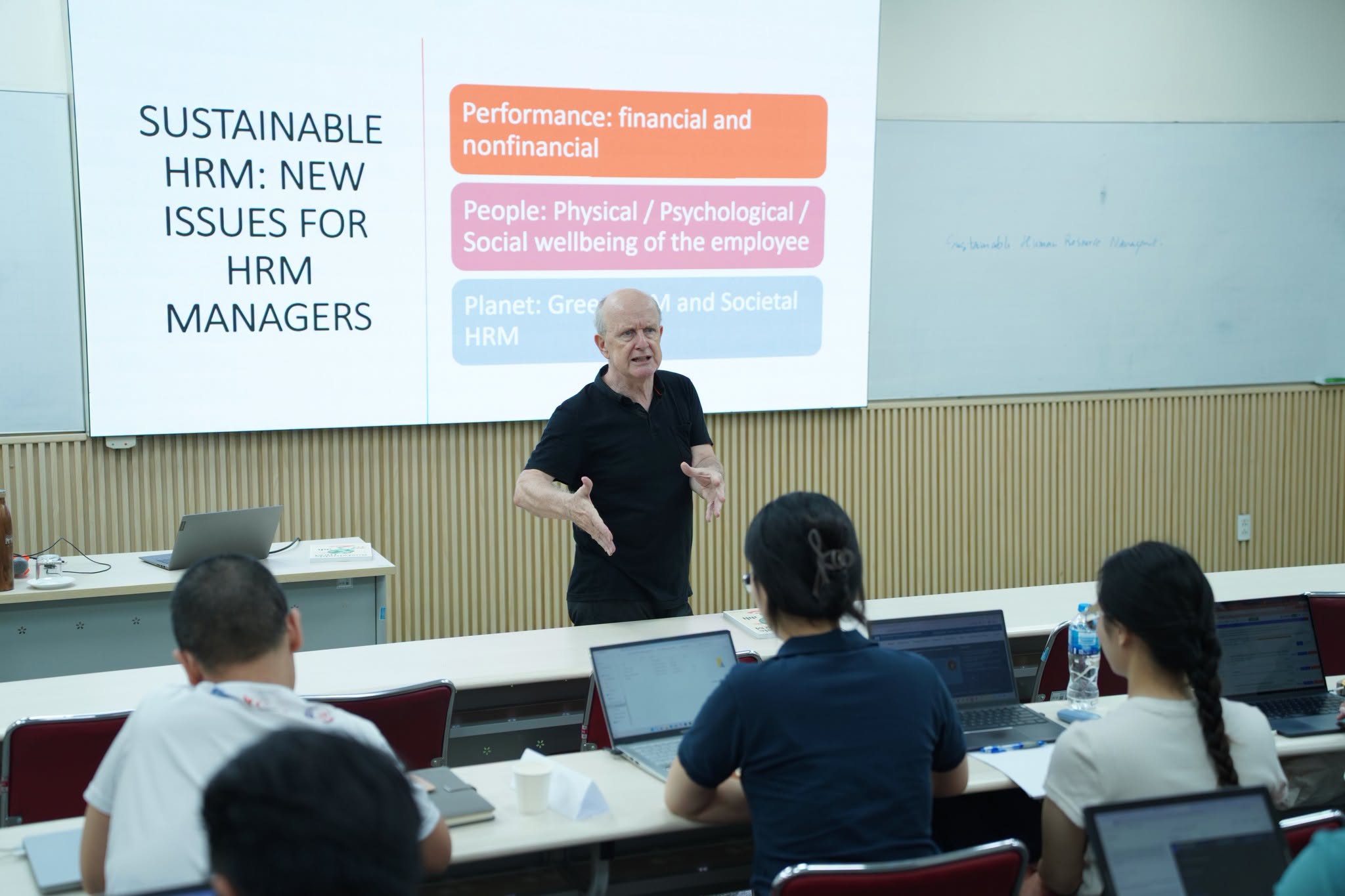
The discussion with Professor Alex Vanderstraeten broadened HSB-MBA students' understanding of the strategic role of human resource management in a changing business environment. By engaging with international research and practical management issues, participants gained additional perspectives for analyzing challenges related to talent development, workforce performance, and the creation of sustainable organizations.
Strengthening connections with international experts is one of HSB's approaches to integrating academic knowledge with the practical requirements of MBA education. Through these engagements, the program aims to cultivate strategic thinking, analytical capabilities, and effective decision-making skills, preparing students to address management challenges in an increasingly complex and dynamic business environment.
HSB-MBA | CONNECTING GLOBAL KNOWLEDGE
Advancing Management Thinking for Sustainable Value
By bridging academic research and executive practice, the session reinforced the strategic importance of people management in strengthening organizational competitiveness and creating lasting value.