
Professor, Dr. Hoàng Đình Phi: “To earn respect, one must possess their own distinct value.”

HSB | PERSPECTIVES ON EDUCATION
School of Business and Management – Vietnam National University, Hanoi
Professor Hoang Dinh Phi: “To Earn Respect, We Must Have Something of Our Own to Offer”
On 3 November 2026, Quacquarelli Symonds (QS) released the QS Asia University Rankings 2027 (QS AUR 2027). Vietnam National University, Hanoi (VNU) was ranked 159th, retaining its position as Vietnam's highest-ranked higher education institution and placing among the top 9.2% of institutions in Asia, compared with 10.3% in the 2025 ranking.
Earlier, on 12 May 2026, the School of Business and Management (HSB), a member of Vietnam National University, Hanoi, was officially awarded a 5-Star QS Stars rating by QS, based on 56 quality assessment criteria. To date, HSB is one of only three educational institutions in Vietnam, and the first public institution, to achieve this 5-Star distinction.
To mark this occasion, HSB is pleased to republish an interview conducted by the People's Army Newspaper with Professor Hoang Dinh Phi, Rector of the School of Business and Management (HSB), discussing the University's efforts in innovation and educational transformation that led to its QS 5-Star recognition.
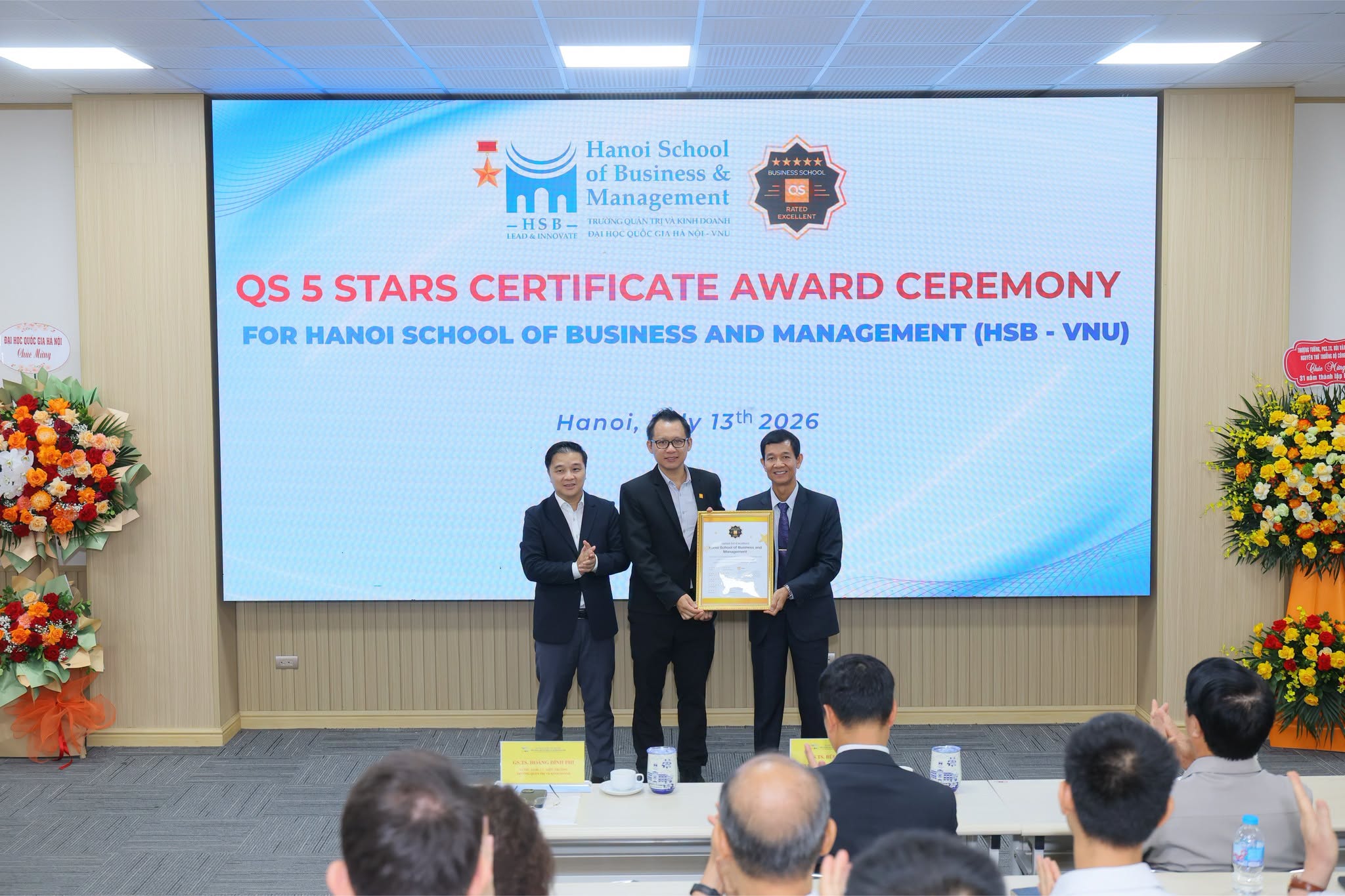
(People's Army Newspaper) The School of Business and Management (HSB), Vietnam National University, Hanoi, has become the first public higher education institution in Vietnam to receive an overall 5-Star QS Stars rating from Quacquarelli Symonds (QS), a UK-based international education ranking organisation. This prestigious international recognition affirms the quality of Vietnamese higher education in general and HSB in particular. On this occasion, the People's Army Newspaper held an open discussion with Professor Hoang Dinh Phi, Secretary of the Party Committee and Rector of HSB.
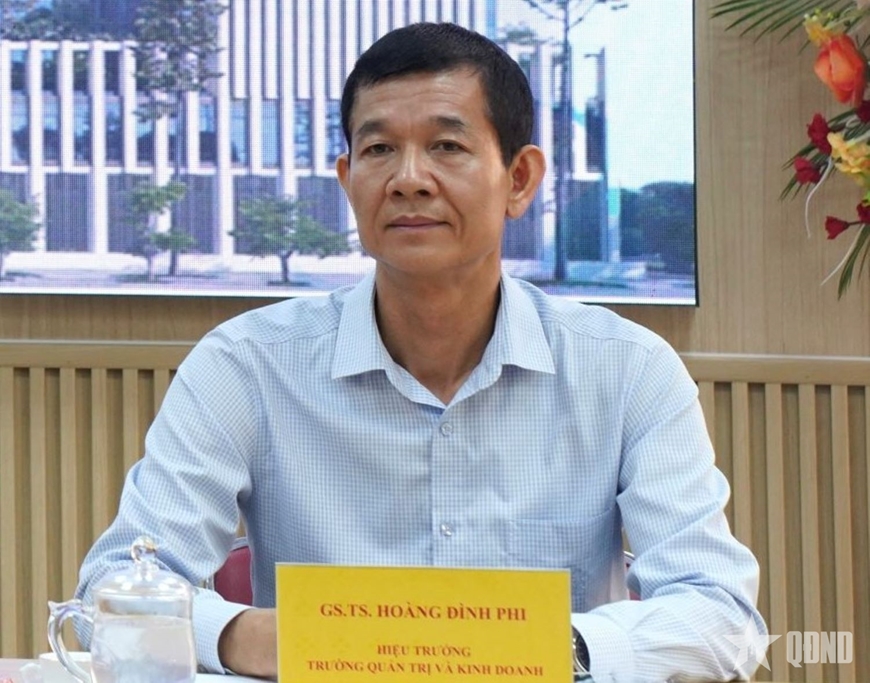
Interviewer: Professor, what does this milestone mean for HSB and for the broader internationalisation of Vietnamese higher education?
Professor Hoang Dinh Phi: Becoming the first public institution in Vietnam to achieve an international QS 5-Star rating is a source of great joy and pride for the School. More importantly, however, it carries profound significance. First, it reaffirms the soundness of the Communist Party of Vietnam's policy of educational reform and development. Second, it demonstrates the capabilities of Vietnamese professors and educators. Despite the absence of a fully developed institutional autonomy framework, substantial financial resources, and favourable support mechanisms, determination, innovation, creativity, and a willingness to pursue breakthroughs can still enable us to develop interdisciplinary academic programmes that meet international standards.
Achieving a QS 5-Star rating is a challenging journey because the QS assessment framework is both rigorous and comprehensive. Academic programmes must be delivered in English, establish English-language proficiency requirements for graduates, and obtain international quality accreditation. Only then does the assessment consider factors such as facilities, faculty qualifications, scientific research, industry collaboration, social contributions, employment standards, graduate outcomes, and student experience.
I believe the QS 5-Star milestone demonstrates that, even under difficult circumstances and despite institutional and administrative constraints, Vietnam is fully capable of developing high-quality university education models that meet international standards through its own internal strengths. This is possible when professors, researchers, and educational leaders are willing to dedicate themselves, make sacrifices, and persist in innovation, rather than relying solely on the “importation” of foreign educational models.
Interviewer: As competition in global higher education continues to intensify, which of HSB's core values do you believe QS recognised most highly?
Professor Hoang Dinh Phi: Throughout more than 30 years of development, the School has changed many aspects of its operations, including its strategies, objectives, and development models, to adapt to evolving circumstances. However, two things have never changed: our mission and our core values.
Our core values are grounded in a philosophy of holistic human development. The School places particular emphasis on six core values for students: health, ethics, willpower, talent, love, and responsibility. We have always regarded students as the centre of everything we do. The School exists and develops because of its students, and the future of the School is inseparable from the future of its students.
Achieving a QS 5-Star rating is merely the beginning of the next stage of our journey. What matters most is not the ranking itself, but how we can contribute to implementing the major resolutions of the Party and the State concerning innovation, enterprise development, science and technology, and the improvement of the quality of the national workforce. We hope this educational model will continue to develop, be replicated, and serve as a foundation for collaboration with other Vietnamese universities so that we can advance together.

Interviewer: How can higher education move beyond an overly theoretical approach to teaching and place greater emphasis on creativity and innovation?
Professor Hoang Dinh Phi: For meaningful reform to take place, Vietnamese universities must develop their own distinctive schools of academic thought. If we merely follow what the rest of the world is doing, we will always remain behind. Only when Vietnam generates new knowledge, new models, and new approaches will the international academic community engage with us on an equal footing.
We do not believe in the mindset of asking foreign countries to provide us with knowledge or technology. If we want to be respected, we must have something of our own to offer.
PROFESSOR HOANG DINH PHI
“If we want to be respected, we must have something of our own to offer.”
Therefore, the School consistently encourages creativity, promotes interdisciplinary scholarship, and develops innovative educational models that are suited to Vietnam's context while meeting international standards.
Interviewer: Professor, how do you foresee the labour market changing over the next 10–20 years as artificial intelligence and digital transformation continue to reshape society?
Professor Hoang Dinh Phi: The world is changing rapidly, bringing profound transformations to the labour market and placing increasing pressure on businesses, employees, and universities alike. In our view, nearly all undergraduate programmes in Vietnam will need to undergo significant changes in the coming years, particularly by reducing the emphasis on courses in which AI can provide more effective support than lecturers.
Universities should focus on three core areas of competency: foundational knowledge and interdisciplinary thinking; life skills, teamwork, decision-making, and adaptability in uncertain and rapidly changing environments; and emotional intelligence and cultural resilience, enabling students to avoid excessive dependence on the virtual world or being drawn into extreme trends.
Ultimately, our goal is to educate Vietnamese individuals who possess a strong cultural identity, ethical values, a sense of responsibility, and the capabilities necessary for successful global integration.
Interviewer: Thank you very much, Professor, for sharing your insights.
Thu Huong (People's Army Newspaper)