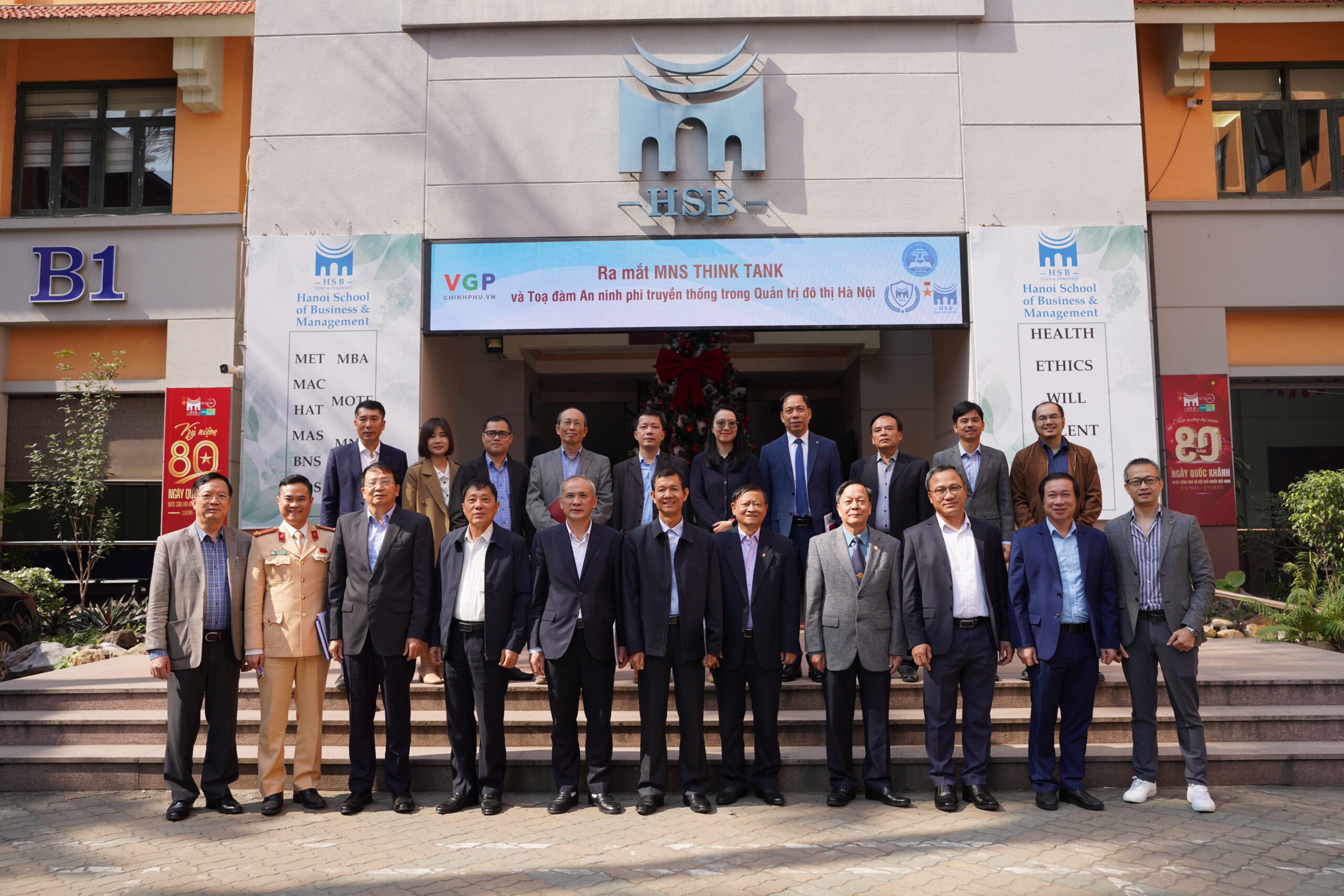
Institute of Non-Traditional Security
An interdisciplinary institute for research, training, and knowledge transfer under Vietnam National University, Hanoi
Building on NSMS, the center established on January 13, 2019, the Institute of Non-Traditional Security has grown into a hub for research, training, and strategic advisory in security governance and non-traditional security governance, serving both public and private sectors and contributing to the country's sustainable development goals.
Interdisciplinary researchTraining and executive developmentStrategic advisory
2019Founding year of NSMS, the predecessor center, under the decision of the School of Business and Management.
2022Year officially upgraded to the Institute of Non-Traditional Security.
3Core function groups: research, training, and project advisory and implementation.
31+Member institutions in the NTS-ASIA network according to the Institute's activity overview.
2025Publication of the first issue of the Journal of Non-Traditional Security Governance.
5Core duty groups highlighted in the official introduction.
5Strategic development directions announced by the Institute for the next phase.
An autonomous operating model anchored in interdisciplinary research
The Institute of Non-Traditional Security is organized and operated under an autonomous model, covering its recurrent and investment expenditures at the school level, with its own seal and bank account. It is also one of Vietnam's first interdisciplinary public research models dedicated specifically to non-traditional security.
On that foundation, the Institute develops research, training, and knowledge-transfer directions to support government agencies, local authorities, organizations, and businesses in addressing new security challenges amid international integration and digital transformation.
Functions
Three pillars of the Institute's work
01
Research and innovation
Undertakes research, development, and transfer of scientific and technological knowledge for agencies, organizations, and businesses in the fields of security governance and non-traditional security.
02
Training participation
Contributes to human-resource development in security, security governance, and non-traditional security governance in line with protection and sustainable development needs.
03
Strategic advisory & project implementation
Provides advisory, bidding, and implementation services for science and technology projects related to ensuring non-traditional security in accordance with the law.
Projects implemented
Selected research and implementation projects led or delivered with INS participation
The projects below reflect INS implementation in environmental security, economic security, digital economic security, and local risk governance, based on items published in the Institute's scientific research archive.
Nghe An · Provincial level
Environmental and water security
A provincial research project focused on preventing legal violations and crime related to environmental security and water security in Nghe An province.
Can Tho · City level
Digital economic security for development
A city-level program on preventing and ensuring digital economic security in support of Can Tho's socio-economic development.
Binh Duong · Science and technology
Economic security in enterprises
A provincial project evaluating the current situation and proposing practical solutions to strengthen economic security in enterprises across Binh Duong.
Hai Phong · City level
Marine, island, and port environmental security
A research project investigating, analyzing, forecasting, and building response scenarios for threats to marine, island, and port environmental security.
Activity areas
Research, training, and knowledge-exchange programs
According to the Institute's introduction, current activities focus on research and short-term development programs across topics such as traffic safety, urban security, cybersecurity, maritime security, border security, postal and telecommunications security, aviation security, school security, journalism and media, diplomacy, military affairs, religion, crime prevention, and disaster prevention.
Training and executive programs
Organizes short-term development programs, certified courses, and advanced training in non-traditional security governance for the public and private sectors.
Research and application
Develops research projects, reports, and science-and-technology solutions that can be translated into governance tools, policy advice, and practical implementation.
International cooperation
Connects with organizations, partners, and regional research networks to broaden academic exchange and update new security-governance knowledge.
Academic publishing
Promotes domestic and international scholarly publication and develops the Journal of Non-Traditional Security Governance with a high-quality academic orientation.