
History of the Hanoi School of Business and Management (HSB) at VNU and the HSB – Tuck School of Business (Dartmouth College) Partnership
[Before 2021] Hanoi School of Business (HSB), known in Vietnamese as Khoa Quản trị Kinh doanh (HSB), holds the rank of a member school within the Vietnam National University, Hanoi (VNU) model. Thanks to the wholehearted support and assistance of the Vietnamese business community, faculty members, alumni, and special American friends, HSB has become a unique school of management in Vietnam, developing sustainably based on four pillars: Public, Autonomous, Not-for-profit, Public-private partnership. In 2016, HSB changed its Vietnamese name to Khoa Quản trị và Kinh doanh Hà Nội, while the HSB logo and brand were kept unchanged. In 2021, HSB was renamed the School of Business and Management. Currently, HSB offers 10 advanced and full-time programs ranging from undergraduate (MET, MAC, HAT, MAS, HAS, BNS), to master's (MNS, MBA, MOTE), and doctoral (DMS).
It is a profound honor to have been invited by HSB to contribute to writing about the history of HSB, the first market-economy business school model in Vietnam. I was fortunate to have been a partner of HSB for over a decade, from the early days of 1994 when a school of the stature and leadership that HSB holds today in Vietnam existed only in the ideas and hopes of a group of visionary Vietnamese business leaders and scholars, until 2006, one year before I retired from the Tuck School of Business at Dartmouth College and participated in joint programs between Tuck and HSB.
The Plan to Establish a Market-Economy Business School in Vietnam
In late 1993, I received a telephone call from a former colleague at the White House Office of the United States Trade Representative (USTR). The caller was Michael Samuels, former U.S. Ambassador to the GATT, the General Agreement on Tariffs and Trade, now the World Trade Organization (WTO). Ambassador Samuels called to convey a message from the Vietnamese government and VCCI inviting me to join him and a Thai Ministry of Commerce official at a trade seminar in Hanoi early the following year. At that time, I was a Professor and Director of the Center for International Business at the Tuck School of Business at Dartmouth College in the United States.
I received the invitation because, before joining the Tuck faculty, from 1982 to 1992, I had held several positions in the White House — at the Office of the United States Trade Representative (USTR) and the Office of Policy Development, rising to the position of Chief Trade Negotiator with China and Japan from 1985 to 1992. My experience negotiating with China was particularly relevant to the seminar's purpose, as Vietnam was preparing to normalize diplomatic relations with the United States. The two countries would soon negotiate a bilateral trade agreement, paving the way for Vietnam's accession to GATT/WTO. The United States was expected to make demands similar to those it had made in negotiations with China — to Vietnam, a nation in the early stages of transitioning from a centrally planned to a market economy. I was delighted by this invitation and eager to participate. I had never been to Vietnam and saw the seminar as a place where my experience at USTR could contribute to advancing U.S.–Vietnam relationship.
The seminar took place at the Ho Chi Minh Exhibition Hall in Hanoi in January 1994. During the morning break, I had the chance to speak with a man named Nguyen Thu Do, a government official at the Office of the Prime Minister in charge of economic affairs. He introduced himself as a Harvard master's graduate who, after returning to Vietnam, had become a member of a group of Vietnamese scholars interested in establishing a market-economy business school like Tuck, to be housed at Vietnam National University, Hanoi. He asked whether Tuck would be willing to help. I replied that I personally would be very happy and honored to assist, and I was quite sure Tuck would feel the same. I promised to raise the matter with the Dean of Tuck upon my return to the United States. Supporting the founding team and Vietnam National University, Hanoi in creating a modern, market-economy business school would be one way that I, and my fellow professors at Tuck, can make a meaningful contribution to fostering closer ties between our two countries – something very important to me and many other Americans.
Meeting the HSB Founding Group
Towards the end of the trip, Mr. Do introduced me to his group of friends, who shared the goal of creating a business school that could deliver the subjects that Vietnamese leaders and managers needed as the country opened up to a market economy and faced international competition, in line with the "Doi Moi" reform program. I consider this the founding group of the Hanoi School of Business and Management (HSB). The group includes two members who were the first Vietnamese to pursue the Master of Business Administration (MBA) in the United States after 1975: Mr. Tran Vu Hoai and Ms. Dinh Thi Hoa, both of whom received MBAs from Harvard Business School. Another member was Mr. Ha Trung, a Vietnamese-American businessman who had known Mr. Hoai and Ms. Hoa while they were students in Boston.
A key member of the group was someone who had never studied in the United States and had never studied business — Dr. Truong Gia Binh. Dr. Binh studied and received his PhD in mathematics and physics from Lomonosov Moscow State University in Russia. Dr. Binh was the person who drove HSB from an idea to a fully operational educational institution. Upon his return from Moscow, he was appointed Director of the Food Processing Technology Company (FPT). Since his appointment in 1994, he has transformed FPT into one of Vietnam's leading technology companies, now known as FPT Corporation.
Following the conclusion of the international trade conference in January 1994 and several discussions with the founding team about the school's establishment plan, I returned to Tuck to meet with Dean Paul Danos to inform him of the opportunity to contribute to business education in Vietnam. He was very supportive and wanted me to be the person representing Tuck, responsible for raising any necessary funding.
The first thing to do was to gather interest and support among Tuck faculty members. Professors Paul Argenti and Mary Munter were in Thailand during the spring break in March 1994, and I persuaded them to visit Hanoi to meet the HSB founding group. They were very impressed with the quality and integrity of the founding team, as well as their vision for HSB. Around the same time, Dr. Binh and the founding group recruited the first young faculty members to teach at HSB. From the Tuck side, Professor Argenti, Professor Wayne Broehl, and I worked with the HSB founding group on the development strategy for upcoming programs and curricula. The initial strategy was to focus on short-term executive management programs before launching an MBA program, and the decision on whether to pursue an undergraduate or doctoral programs would be reserved for the future. An interesting issue arose during our discussions — the school's abbreviation: should it be called HBS (Hanoi Business School) or HSB (Hanoi School of Business)? The group decided on HSB to avoid confusion with other business schools abbreviated as HBS.
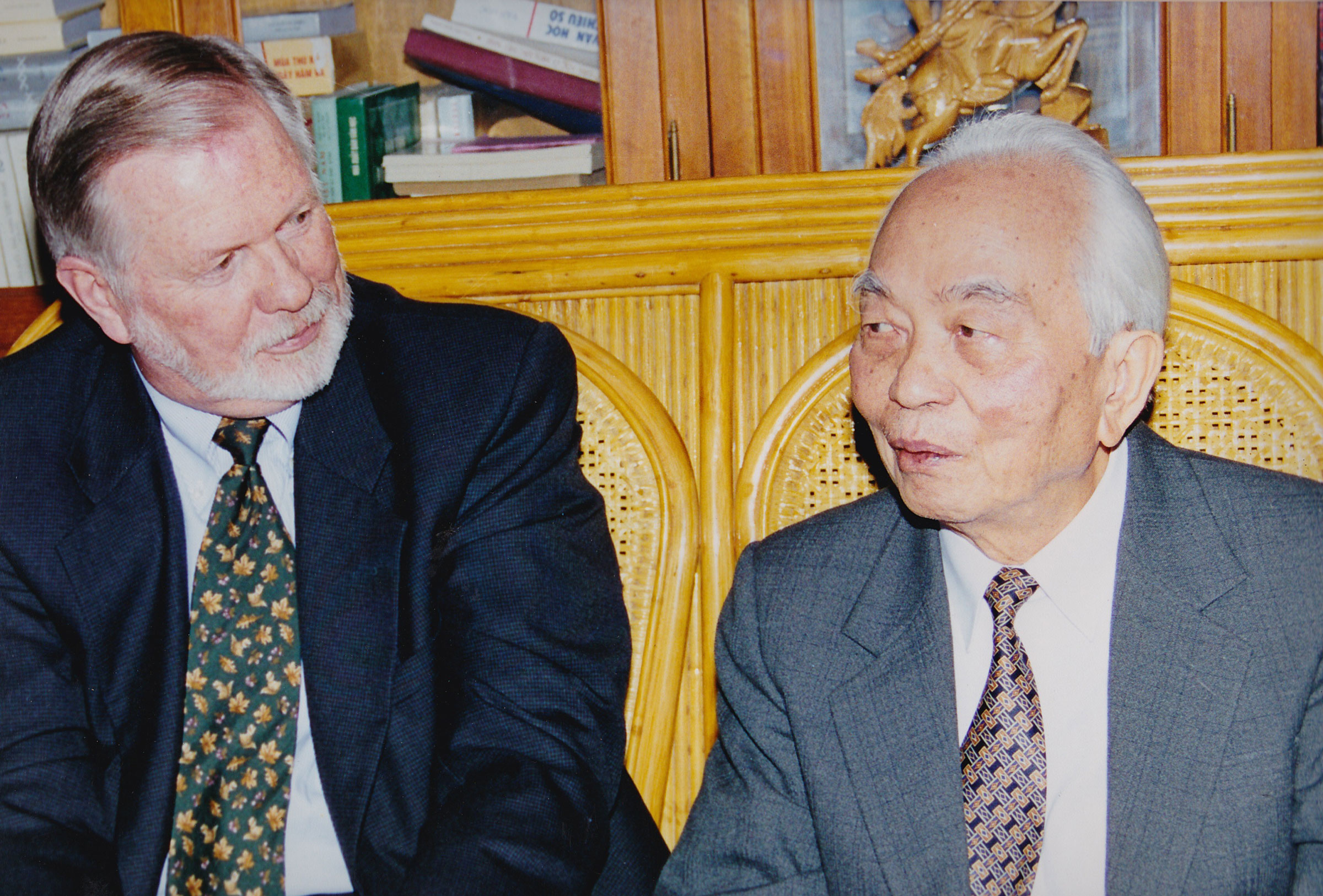
The establishment of HSB faced many challenges. The first issue was gaining acceptance and recognition as a member unit of Vietnam National University, Hanoi (VNU). Before its establishment, Professor Tran Ngoc Hien, a leading economist and Head of the Faculty of Political Economy at VNU, was appointed as the head of the faculty of HSB. This view stemmed from my colleagues at Tuck and myself at the time, recognizing that Prof. Hien held the position of head of the Faculty of Political Economy at VNU. Therefore, Prof. Hien could help HSB gain the support of the Faculty of Political Economy and related faculties to establish a sustainable link with VNU, while also setting goals and plans that align with the country's needs and formulating policies in line with the views of educational authorities. When Professor Hien stepped down after a short time, Truong Gia Binh took over as Head of the Faculty of HSB and led it for the remainder of my tenure, until Associate Professor Hoang Dinh Phi assumed the position as the third Head of faculty of HSB in 2013. Earlier, I had also met and befriended Professor Nguyen Van Dao, who was then the President of Vietnam National University, Hanoi. Professor Dao was a strong advocate for the founding group in establishing HSB's autonomous status as an independent and distinct unit within VNU, with financial, personnel, and academic autonomy. The establishment of HSB at VNU was a pioneering step within the country's national university system and became a model for other units to follow. A few years later, I was deeply saddened to represent Tuck at the memorial service for Professor Dao after his sudden passing in a traffic accident. His decisiveness and support, both within VNU and in working with senior government education officials, were absolutely critical to HSB.
The second challenge was how HSB would be received by the Vietnamese business community. Here, the collective credibility of the founding group members proved to be an invaluable asset. Key members had extensive relationships with both Vietnamese and foreign companies operating in Vietnam. Their expertise and success in building and managing businesses were well-known and respected, and their commitment to HSB was a tremendously valuable asset for the school, further amplified by the appointment of Truong Gia Binh as Deputy Head and later Head of HSB.
An obvious challenge that the founders, like all start-up entrepreneurs, faced was capital (financial resources). Vietnam National University provided a crucial contribution — a plot of land on the VNU campus was allocated to HSB for building its facilities. However, HSB would have to raise the money for construction on its own. HSB's leadership turned to the Vietnamese business community and entrepreneurs to raise the necessary funds and received enthusiastic and generous support. With contributions from many business owners, HSB had all the financial resources needed to construct a modern, spacious building within one to two years of its founding. From this foundation, HSB grew to a position of prestige and national recognition.
Funding operations was also an issue, and here HSB employed a very successful strategy. Rather than immediately establishing an undergraduate program or MBA program dependent on tuition revenue, HSB chose to start by offering short-term training courses on specific, practical topics for Vietnamese business executives. The advantage of this strategy was that participating companies could pay substantial fees for the courses, and satisfied managers would continue to recommend their colleagues for subsequent courses, thereby providing an ever-expanding client base for HSB. In short, HSB operated the way a start-up should — minimizing costs, supplying the market with an in-demand product, and gradually building and increasing cash flow. Within just a few years, the cash flow from short-term courses enabled the school to launch an MBA program with both full-time and part-time options. More importantly, these short courses also proved very useful in overcoming difficulties in recruiting, training, and retaining faculty. Young Vietnamese with MBA degrees working in businesses could be invited to become faculty members with attractive salaries and benefits. Thanks to the revenue from these short-term courses, HSB could allocate attractive compensation to attract young faculty while providing them with valuable teaching experience and an extensive network within the business community.
The International Executive Development Program for Vietnamese Managers
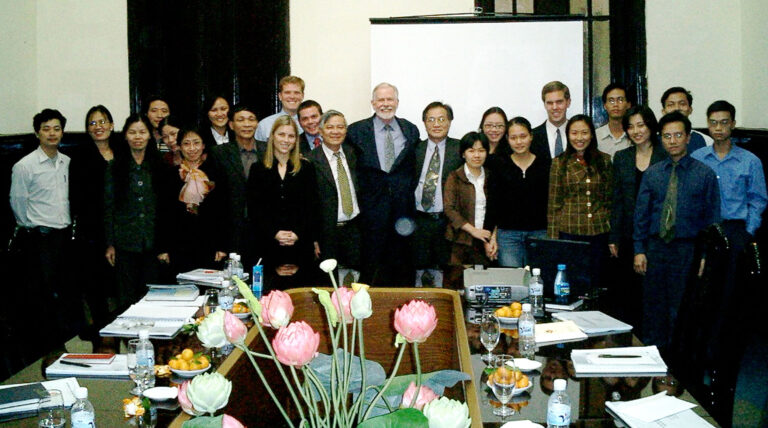
The International Executive Development Program for Vietnamese Managers (IEDP), a joint program between HSB and Tuck, was HSB's first specialized program and played a pivotal role in its successful development and recognition by the Vietnamese and international business communities. As a co-director of IEDP from the Tuck side, I took overall responsibility for the program; Professor Paul Argenti served as an academic director. On the HSB side, the Head of Faculty Truong Gia Binh was the co-director of IEDP.
IEDP focused on delivering international-standard business modules for managers who were running or holding senior management positions in Vietnamese companies, including both state-owned and private enterprises. I sought financial support for the program and was pleased with the positive and strong responses received. Several American companies contributed funds to our efforts. Citibank was one of them, and its Vietnam branch director, Bradley LaLonde, also became an active and enthusiastic supporter of this new business school. Mr. LaLonde, now CEO of Vietnam Partners, remains an active advocate for business education in Vietnam and HSB to this day.
By far the largest source of financial support for the IEDP was the Freeman Foundation of Stowe, Vermont, a family foundation established by Houghton Freeman, former CEO of AIG, Inc., and his wife Doreen Freeman. Over eight years of program operation, the Freemans' financial support amounted to millions of dollars, covering all costs of the three-semester, six-month experiential learning IEDP program. The Freemans' support was absolutely critical to IEDP — a program that served as HSB's foundation during its first decade of operation. I know that all of us who built IEDP, on both the Tuck and HSB sides, deeply valued the Freeman Foundation's support for IEDP and for several joint consulting projects between Tuck and HSB that I will describe below.
The first phase of the IEDP program began with one-week-long courses each January, introducing the fundamentals of market economy business taught by a Tuck professor, mostly Professor Wayne Broehl, with HSB teaching assistants. Then, over the following two months, classes continued with HSB faculty, delving deeper into the topics that had been introduced. Subsequently, in March, during the American spring break, a group of Tuck professors would come to Hanoi and teach intensive classes covering business fields from accounting and finance to operations, supply chain management, marketing, human resources management, international trade, strategy, and other topics depending on the expertise of faculty members.
During the implementation of the IEDP, more than half of Tuck's faculty participated in teaching, many of them teaching continuously over multiple years. These faculty members included Dean Danos and former Dean of Tuck, Professor Colin Blaydon. At HSB, several members of the founding group, including Head Truong Gia Binh, Tran Vu Hoai, and Ha Trung, taught during the first two years of IEDP while the Faculty was recruiting additional faculty. Many other faculty members, such as Dr. Tran Phuong Lan and MSc. Ha Nguyen, who both directly oversaw one or more of the school's other programs, made significant contributions as the faculty stabilized. Other professors and lecturers such as Roger Ford, Augustine N. Vinh, Nguyen Thi Mai Linh, Do Xuan Truong, Nguyen The Hung, Nguyen Viet Anh, and others taught in some IEDP sessions or in one or more of HSB's short-term courses. Mr. Phan Thanh Tung and Ms. Nguyen Thi Mai Linh supported the management of these corporate training programs. Ms. Hong Thanh Thoai Nhi and her assistant, Ms. Le Mai Chi, performed the crucial task of planning IEDP, managing teaching schedules, professors, participants, and other administrative affairs with great efficiency and enthusiasm. Ms. Darlene Bailey supported IEDP administrative matters at Tuck.
The core of IEDP was helping participants master and respect the entrepreneurial method and spirit — the central element of a market economy where new companies are constantly created, taking leaps forward, always risking and occasionally succeeding in implementing new ideas and ventures, enriching and expanding available choices for consumers, diversifying and innovating in competition, and sustaining the economy for society. IEDP participants were experienced managers, but their experience had been accumulated largely in enterprises operating under a centrally planned (subsidized) economy. Thanks to the Doi Moi (Renewal) 1986, the Vietnam economy was heading in a new direction in which businesses would need to develop and execute plans based on opportunities and risks arising from market forces and competitive factors. Therefore, the third part of the IEDP program focused continuously, from beginning to end, on entrepreneurship — the process of creating a new business.
In January, participating managers were divided into groups of five to six people who would work together throughout the course to develop plans for new business ventures. In March, Professor Argenti and I would review and critique each group's business plans. Then, in the third phase of the six-month program, several groups — typically more than half of the participants — would travel to the United States for two weeks, joining a study tour that I organized and led during the summer. The final session would be a presentation at Tuck by the IEDP team on their business plan to Tuck faculty and American business leaders, venture capitalists, investment bankers, and other guests. On some occasions, Houghton Freeman would drive from the Foundation's headquarter to Hanover, a small white farm in Stowe, Vermont, to participate in peer review of the IEDP team's presentations.
Prior to the final week of business plan classes and presentations at Tuck in Hanover, New Hampshire, Tuck's Center for International Business arranged for HSB teams to visit numerous businesses on both the West and East coasts of the United States. In the early years, the West Coast meetings took place in Seattle, where we visited facilities and held group sessions at Microsoft and Boeing. In the program's following years, we traveled to Silicon Valley, where the groups presented initial business plans to venture capitalists, and Napa Valley, where the groups heard presentations on high-value-added agribusiness at the valley's largest independent vineyard, owned by Tuck alumnus Andy Beckstoffer. Mr. Beckstoffer also introduced the participants, who were then invited to visit and sample the renowned Cabernet Sauvignon wine at the Stags Leap Cellars winery.
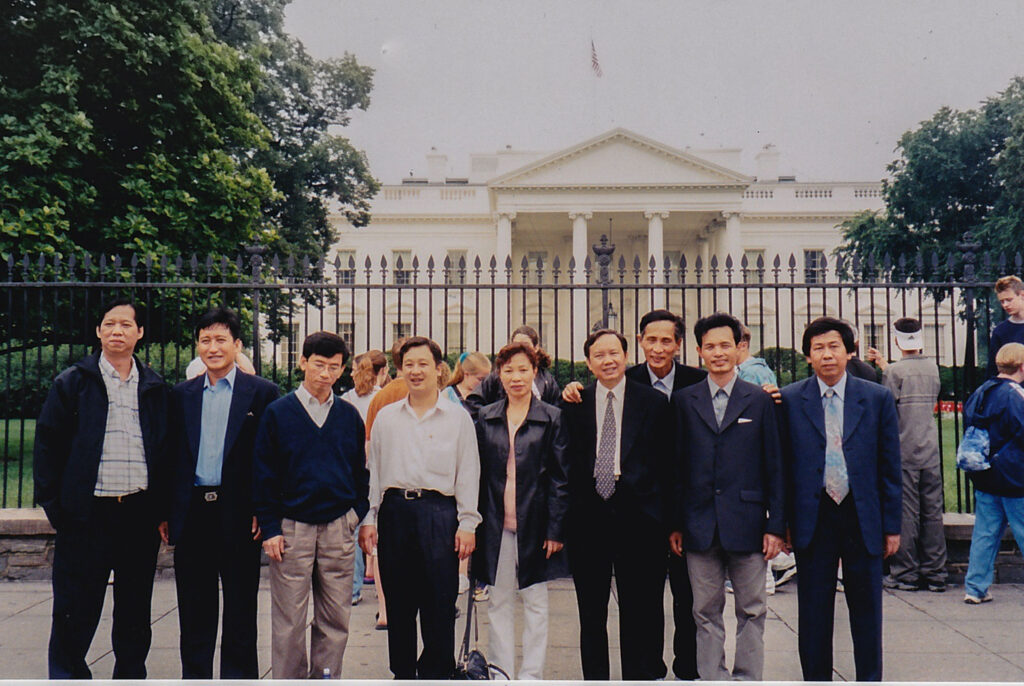
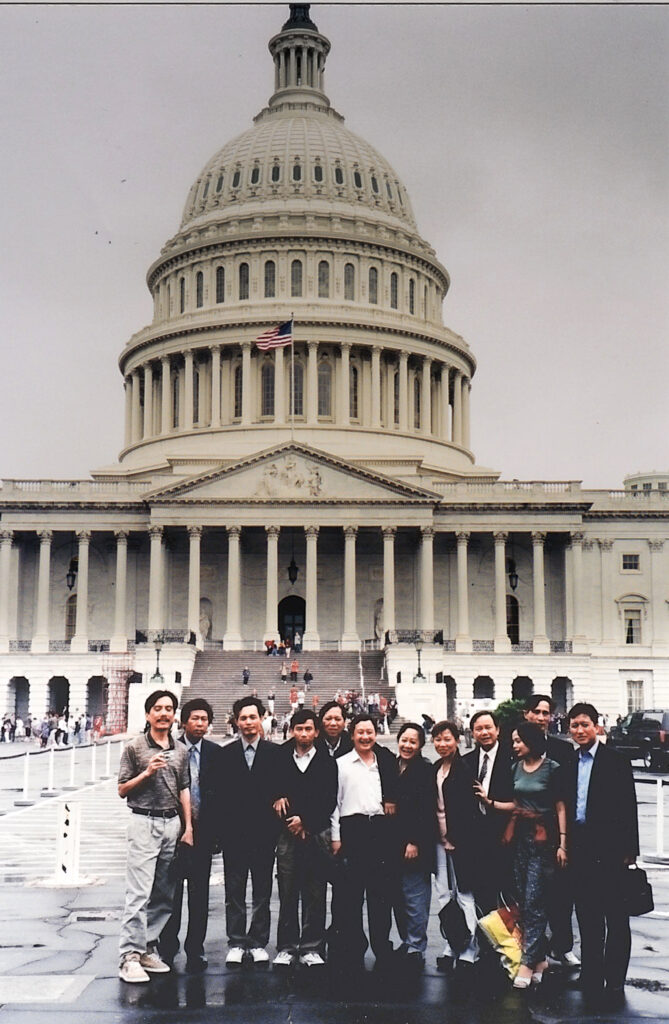
On the East Coast, in Washington, D.C., we received briefings from officials at USTR, the State Department, the Department of Commerce, the U.S. Treasury, and the Embassy of Vietnam in the United States on the U.S. government policies related to U.S. – Vietnam trade, economic, and business relationship. Additionally, the U.S. Chamber of Commerce and the U.S.–Vietnam Trade Council provided introductions to American business–government relations. In New York City, we met with and heard presentations from major Wall Street firms such as AIG, Citibank, Morgan Stanley, and many others. At the Federal Reserve System (FED), we received a briefing on the functional groups and the significance of the FED's role in U.S. monetary policy; they led us down into the vault deep underground, where group members could observe (but not sample, much like the wine in Napa) billions of dollars' worth of gold bars that the Bank held in custody for many other nations.
The IEDP groups, upon arriving in the United States, traveled from one meeting or event to the next by bus chartered by Tuck's Center for International Business. My job as program director was to arrange the meetings, and I was fortunate to ride along with the groups on the bus, getting to know and befriend group members, many of whom I still see whenever I visit Vietnam. To make the bus rides more enjoyable, each day as we set off, in high spirits, I would stand in the aisle at the front of the bus and sing a song — usually what Americans call a "golden oldie." After I finished, amid smiles and laughter, I would often call on any IEDP member, saying, "OK, it's your turn to sing for us." Invariably, each person would call on the next after singing, until the whole group had joined in the chorus.
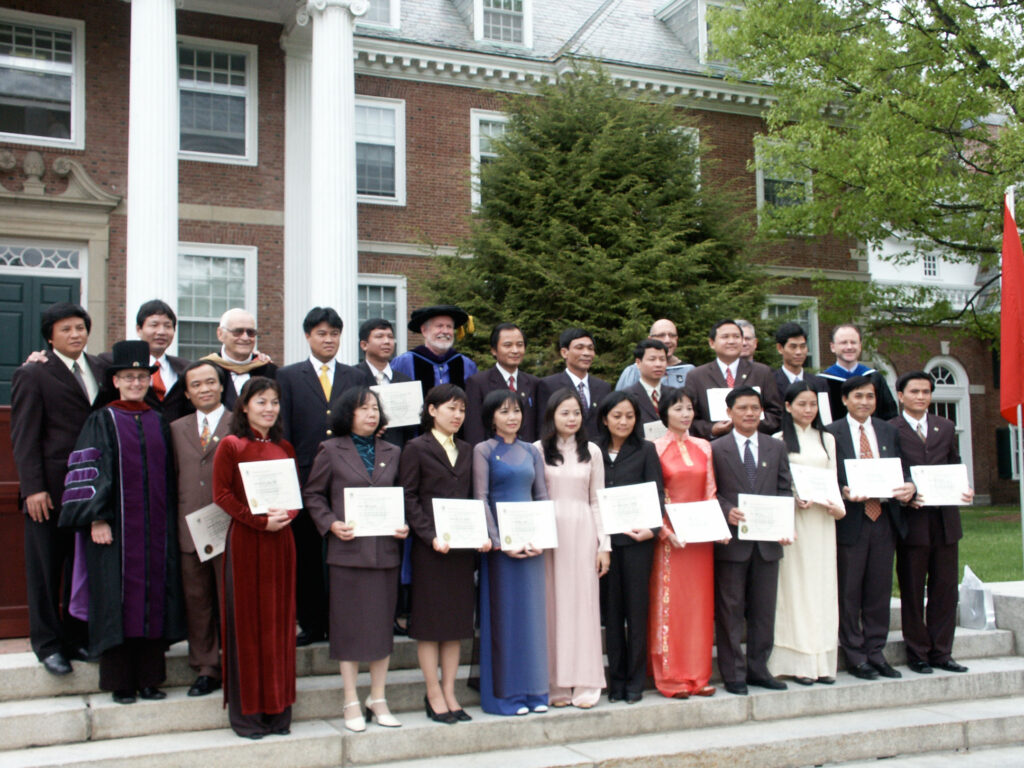
The bus rides took us not only to meetings but also to some of America's famous tourist attractions. We saw the fog rolling over the Golden Gate Bridge in San Francisco, the bustling Pike Place Market on Seattle's Elliott Bay waterfront, vast carpets of wildflowers dotting the slopes of Mount Rainier, rows upon rows of plants and flowers in the computer-controlled greenhouses of Exchange Nurserymen in Half Moon Bay, California, the magnificent campus of Yale University in Connecticut, and on the final leg of the bus ride from New York to Hanover, the green hills and valleys of Vermont. In New York, during the first five years of the program, we stayed at the Marriott World Trade Center hotel until it and the adjacent twin towers — home to the observation deck that IEDP participants had visited — were destroyed in the tragic attacks of September 11, 2001.
Nearly 350 CEOs and senior executives from Vietnamese companies, from across the country — both Hanoi and Ho Chi Minh City — participated in the IEDP over eight years from 1996 to the end of 2003. Participating managers came from many of the country's largest state-owned enterprises and most prominent companies, including PetroVietnam, VINACOAL, VINASTEEL, Vietnam National Cement Corporation, VNPT, FPT, BIDV, EXIM Bank, VietcomBank, Bao Viet, Bao Minh, Vietnam Airlines, Vietnam Railways, and Hanoi Beer Alcohol and Beverage Joint Stock Corporation.
In addition, as a result of the Doi Moi, many executives in the program came from private companies across various sectors. Notable leaders came from companies such as AA Corporation in furniture and interior decoration, Galaxy Company in marketing, public relations, and consulting, Kinh Do in confectionery and fast food products, and Thien Long Company in office supplies. Other participants went on to build leading companies such as NovaLand in real estate and agriculture, and DatVietVAC in media, entertainment, and communications, among many successful companies built by IEDP alumni. It is estimated that by the end of the program, companies whose executives had participated in IEDP accounted for over 30% of Vietnam's GDP, and IEDP graduates comprised 80% of the membership of the Young Presidents' Organization (YPO) in Vietnam.
The list of companies whose CEOs and executives participated in the IEDP is too long for me to mention here. To those IEDP graduates whose company names I have not mentioned, I apologize, and please know that I do so only due to the scope of this article. I am proud of all IEDP graduates and your contributions to the remarkable development of Vietnam's economy over the past two decades.
HSB-Tuck Corporate Consulting Projects
The second joint program between HSB and Tuck was related to the international consulting program for Tuck MBA students that I co-founded and directed since 1996. During the 1996–2006 period, the Tuck program completed approximately 115 projects for over 50 clients in 30 countries around the world. After agreeing with the Head of Faculty Truong Gia Binh, I incorporated work with HSB on Vietnam-based projects as an essential part of this program, and many of the program's earliest projects were carried out in Vietnam.
Consulting projects typically involved a team of five or six Tuck students analyzing a problem that a client company was facing in a country outside the United States. The students, under the guidance of a Tuck professor — in Vietnam for all projects, myself — would work during the fall term at Tuck, then travel abroad with the professor and spend three weeks conducting on-site research. In Vietnam, this phase of the consulting project required both HSB students and faculty to collaborate; under the guidance of HSB faculty, HSB students and Tuck students from various specializations would interview clients, suppliers, agencies, and government offices to produce a preliminary report for the client.
Tuck students, with an average age of 29 or 30, had several years of work experience and could therefore share their interviewing, research, and analytical skills with the younger HSB students. HSB students and faculty advisors could provide Tuck students with deeper insights into Vietnamese culture, markets, and business practices. Several bilateral collaborative projects were carried out for foreign companies such as Cargill, Walt Disney, Johnson & Johnson, and Nike. Projects completed for Vietnamese companies included the Bank for Investment and Development of Vietnam (BIDV), Fahasa, FPT Soft, Hanoi Beer Alcohol and Beverage Joint Stock Corporation, Kinh Do, Techcombank, and Vinausteel. The Freeman Foundation once again generously funded the consulting projects in Vietnam.
Conclusion
Over a decade of working with and learning from HSB's leaders, professors, and participants in the HSB-Tuck joint programs brought me and the Tuck faculty extraordinary memories and profound influence. HSB provided us with an invaluable opportunity to observe and learn fresh and enriching lessons while contributing to the development of business education in Vietnam at a historic moment and throughout the country's continuing journey toward a market economy. HSB gave me many enduring relationships with friends whom I deeply admire. My experience with HSB changed and enriched my life's journey and gave me deep affection for Vietnam in general and HSB in particular. I would like to conclude by sending my warmest and best wishes to all members of the HSB family, as well as all my students, wishing you all continued success.
Joseph A. Massey received an invitation to Vietnam, initiating early discussions on establishing a market-oriented business school.
Meetings with Vietnamese scholars and leaders shaped the vision of HSB at Vietnam National University.
HSB was founded as a pioneering business school based on autonomy, non-profit principles, and public-private collaboration.
The International Executive Development Program (IEDP) became HSB’s first flagship international training program.
Nearly 350 senior executives from major Vietnamese enterprises participated in IEDP.
HSB collaborated with Tuck on over 115 consulting projects across 30 countries.
Companies led by IEDP alumni accounted for over 30% of Vietnam’s GDP.
Assoc. Prof. Hoang Dinh Phi became the third dean, marking a new development stage.
HSB updated its Vietnamese name while maintaining its established brand identity.
HSB officially became a full school within VNU, marking a major institutional milestone.